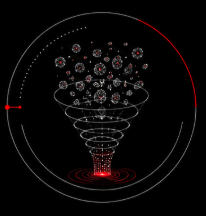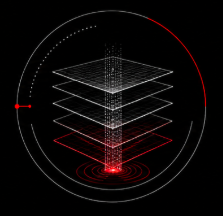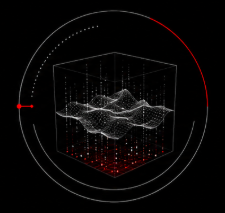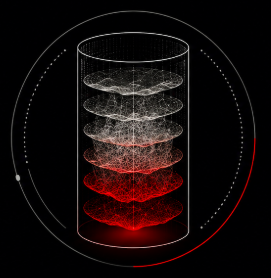
Epslog’s CoreDNA is a core digitalization solution that transforms physical rock cores into continuous, depth-aligned, AI-ready digital datasets through fast, non-destructive multi-sensor scanning.
Before any slabbing or plugging, CoreDNA delivers quantitative core data across geology, petrophysics, geomechanics, and sedimentology, giving every discipline a shared foundation for faster, more objective, AI-powered core analysis from the very start of the workflow.
Rock cores are the foundation of subsurface characterization and one of the most valuable assets in exploration and production. They contain critical information for understanding the reservoir, yet traditional workflows often reduce this value to sparse, destructive subsamples leaving much of the cores continuous information underused.
CoreDNA changes this approach by creating a continuous, multi-sensor digital twin of the core immediately after barrel opening and before irreversible operations such as slabbing or plugging.
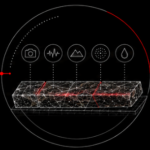
Using a prepared MiniSlab surface and a suite of co-located sensors, CoreDNA captures imaging, geochemistry, 3D topography, grain size, geomechanical properties, and permeability indicators along the full core interval.
The resulting dataset is quality controlled, integrated into directly usable smart reports, and simplified into rock facies that make high-dimensional data easier to interpret. CoreDNA helps specialists select more representative plugs, upscale laboratory measurements, and build a more accurate foundation for subsurface characterization.
CoreDNA begins with the MiniSlab: a 3 cm-wide, precision-machined window prepared directly on the core. This fresh, levelled surface removes mud contamination, optimizes sensor-to-rock contact, and ensures robust, repeatable measurements from the start.
A co-located sensor array scans the prepared core, continuously capturing imaging, geochemical, geomechanical, petrophysical, and textural data along the full core interval, from centimetre to sub-millimetre scale.
As soon as acquisition ends, each sensor output is quality controlled and depth-collocated into one coherent dataset, allowing every discipline to read and compare its data with confidence.
The integrated CoreDNA dataset is formatted for machine learning and delivered as directly usable smart reports, typically within days of acquisition. Multi-sensor measurements are also integrated into rock facies, turning a high-dimensional dataset into an easy-to-read and understandable representation of the core.